 August 27, 2026
What Is Chronic Kidney Disease?
Chronic Kidney Disease (CKD) is a long-term condition in which the kidneys gradually lose some of their ability to filter waste and excess fluid from the blood. CKD can develop because of diabetes, high blood pressure, cardiovascular disease, inherited conditions, repeated kidney injury, or other underlying disorders. In its early stages, CKD may cause few or no noticeable symptoms, which makes regular testing important for people who have risk factors. As kidney function declines, complications can include anemia, electrolyte and acid-base abnormalities, bone and mineral disorders, swelling, fatigue, and cardiovascular problems. Modern CKD management focuses on identifying the cause, assessing kidney function and albuminuria, controlling blood pressure and other risk factors, using appropriate kidney-protective medicines, and monitoring progression. The KDIGO 2024 guideline remains a major international evidence-based reference for CKD evaluation and management.
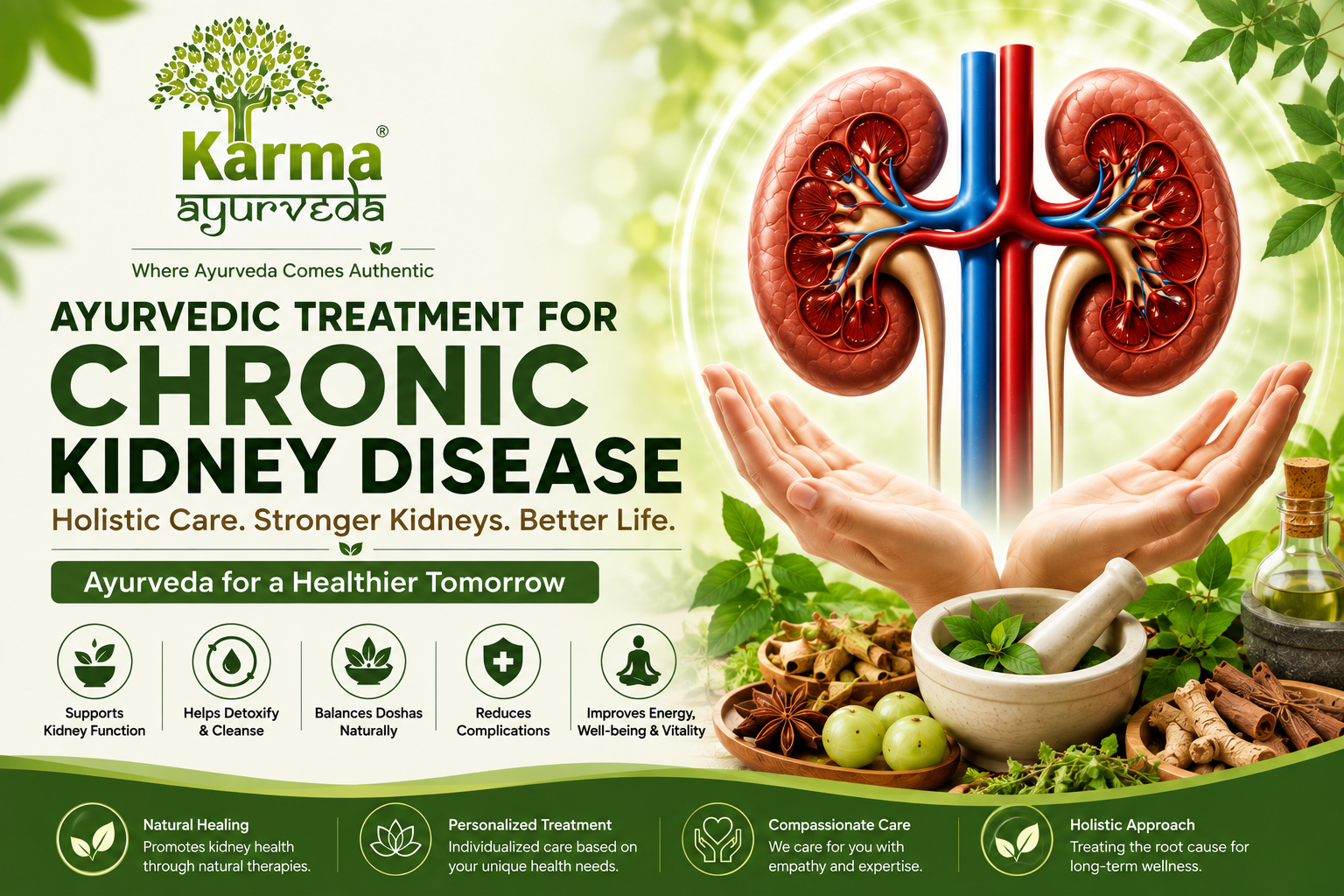
What Is Ayurvedic Treatment for Chronic Kidney Disease?
When people search for Ayurvedic treatment for chronic kidney disease, they are often interested in a holistic approach that includes individualized nutrition, lifestyle management, traditional Ayurvedic practices, and overall wellness support. Ayurveda traditionally views health through the relationship between diet, daily routine, digestion, lifestyle, and individual constitution. However, it is important to distinguish supportive Ayurvedic care from a proven cure: there is currently no established clinical evidence that Ayurveda can reverse the underlying causes of CKD or restore permanently lost kidney function. Therefore, any Ayurvedic program for CKD should be approached as complementary care and coordinated with appropriate medical supervision rather than used as a replacement for evidence-based kidney treatment.
How Can Ayurveda Support People With CKD?
A carefully individualized Ayurvedic wellness approach may focus on healthy eating habits, appropriate physical activity, stress management, adequate sleep, and other daily routines that support overall health. These areas can be relevant to CKD because cardiovascular health, blood pressure, diabetes management, body weight, and lifestyle habits can all influence kidney health. However, people with CKD should avoid adopting a generic “kidney detox” program or taking herbal products without professional advice. As kidney function changes, requirements for sodium, protein, potassium, phosphorus, and fluids can also change, meaning a diet that is suitable for one person may be inappropriate for another. Herbal products can also interact with prescription medicines or contain substances that may be unsuitable for people with impaired kidney function. For this reason, personalized care and communication between the patient's healthcare professionals are important when complementary Ayurvedic therapies are being considered.
Can Ayurveda Cure Chronic Kidney Disease?
Ayurveda should not be presented as a proven cure for chronic kidney disease. CKD has many different causes and stages, and treatment depends on the underlying condition and the individual's kidney function and risk profile. Evidence-based CKD care can include blood pressure management, treatment of diabetes and cardiovascular risk, appropriate use of kidney-protective medications, dietary counseling, and management of complications. KDIGO's current CKD guidance emphasizes evaluation, risk assessment, medication stewardship, and patient-centered management. Some patients may choose to incorporate Ayurvedic practices alongside their conventional treatment plan, but they should not stop prescribed medicines, discontinue dialysis, or delay necessary medical care because of claims about a natural cure. A responsible Ayurvedic approach should recognize the limitations of available evidence and prioritize patient safety.
Why Is Blood Pressure Control Important in CKD?
Blood pressure management is a particularly important part of protecting kidney and cardiovascular health in people with CKD. High blood pressure can contribute to kidney damage, while declining kidney function can make blood pressure more difficult to control, creating a harmful cycle. Current kidney guidelines provide evidence-based recommendations for blood pressure assessment and treatment in CKD, with treatment individualized according to factors such as age, cardiovascular risk, albuminuria, tolerance, and measurement method. Lifestyle measures such as reducing excessive sodium intake, maintaining a healthy weight, staying physically active when medically appropriate, and avoiding tobacco can support overall cardiovascular health, while medications may be necessary when lifestyle measures alone are insufficient. Anyone using Ayurvedic medicines should tell their healthcare provider because some products may affect blood pressure or interact with antihypertensive medicines.
What Diet Is Suitable for Chronic Kidney Disease?
There is no single kidney diet that works for every person with CKD because nutritional requirements depend on kidney function, laboratory results, medications, diabetes status, blood pressure, and the stage and cause of kidney disease. A balanced eating pattern with appropriate sodium intake can be helpful, while protein, potassium, phosphorus, and fluid intake may need to be adjusted for some individuals. People with CKD should therefore be cautious about highly restrictive diets, prolonged fasting, juice cleanses, or excessive water consumption promoted as universal kidney remedies. A registered dietitian experienced in kidney disease can help create an appropriate nutritional plan. Ayurvedic dietary principles can potentially be incorporated into such a plan when they are compatible with the individual's medical needs, but dietary changes should be based on the person's current kidney function rather than on generalized advice.
Why Is Regular Kidney Monitoring Necessary?
Regular monitoring is essential because CKD can progress gradually without producing obvious symptoms. Medical follow-up may involve blood tests such as estimated glomerular filtration rate (eGFR), urine testing for albumin, blood pressure measurements, medication reviews, and other assessments depending on the individual's condition. The purpose is not only to determine whether kidney function is changing but also to identify complications and cardiovascular risk early. KDIGO's CKD framework emphasizes classification and risk assessment to help guide management decisions. People receiving complementary Ayurvedic care should continue recommended kidney testing and appointments rather than relying on symptoms or changes in how they feel. Keeping a complete record of prescription medicines, Ayurvedic preparations, supplements, and laboratory results can also help healthcare professionals make safer and more informed decisions.
Conclusion
Chronic Kidney Disease requires long-term attention because kidney function may decline gradually and complications can develop even before noticeable symptoms appear. Ayurvedic treatment for chronic kidney disease may be explored as complementary support for individualized diet, lifestyle, and overall wellness, but it should not be promoted as a proven cure or replacement for evidence-based medical care. At Karma Ayurveda, under the guidance of Dr. Puneet Dhawan, individuals can explore personalized Ayurvedic wellness support while continuing appropriate kidney monitoring and medical supervision. The safest approach is to understand the cause and stage of CKD, follow an individualized care plan, monitor kidney function regularly, manage blood pressure and other risk factors, and discuss every Ayurvedic medicine or supplement with qualified healthcare professionals. This balanced approach keeps patient safety and informed decision-making at the center of long-term kidney care.
Medical Disclaimer
This blog is intended for general educational purposes only. It does not provide individual diagnosis or treatment. Sexual-health and fertility concerns can have different causes, so personalised advice should be obtained from a qualified healthcare professional.
FAQs
1. Can Ayurveda cure chronic kidney disease?
There is currently no established clinical evidence that Ayurvedic treatment can cure CKD or reliably restore kidney function that has been permanently lost. Ayurveda may be considered as complementary support for lifestyle and general wellness, but it should not replace evidence-based treatment, prescribed medicines, or appropriate nephrology care.
2. Is Ayurvedic treatment safe for people with CKD?
Safety depends on the person's kidney function, medications, health conditions, and the specific Ayurvedic products or therapies being used. Some herbal preparations can interact with medicines or may contain ingredients that are inappropriate for people with impaired kidney function. Therefore, Ayurvedic medicines should be discussed with a qualified healthcare professional before use.
3. Can Ayurvedic medicine increase kidney function?
Claims that a particular Ayurvedic medicine can directly increase eGFR or reverse established kidney damage should be treated cautiously unless supported by reliable clinical evidence. Kidney function can fluctuate for many reasons, and an isolated improvement in a laboratory value does not necessarily mean that CKD has been reversed. Regular testing and professional interpretation are important.
4. What should I eat during chronic kidney disease?
The appropriate CKD diet depends on the stage of disease and individual laboratory results. Many people benefit from controlling excessive sodium intake and following a balanced diet, while protein, potassium, phosphorus, and fluid recommendations may need to be individualized. A kidney dietitian can help develop a plan suited to the patient's specific needs.
5. Can I use Ayurveda along with conventional CKD treatment?
Some people choose complementary Ayurvedic care while continuing conventional medical treatment, but coordination is important. Patients should inform their doctor about all herbs, supplements, and traditional therapies they use so potential interactions and kidney-related risks can be evaluated. Complementary care should not involve stopping medically necessary treatment or delaying urgent evaluation.




Karma Ayurveda, established in 1937, is the leading natural healthcare provider in the country. Visit us and experience the riches of natural healing in its true color.

100 Church Street, Suite 800, New York, NY 10007

+1 9298008690
Copyright © 2026. All Right Reserved. Karma Ayurveda