 October 12, 2026
How Does Chronic Kidney Disease Progress?
CKD usually develops gradually over months or years. In the early stages, the kidneys may continue functioning well enough that noticeable symptoms are absent. As kidney damage increases, waste products and excess fluid can accumulate in the body.
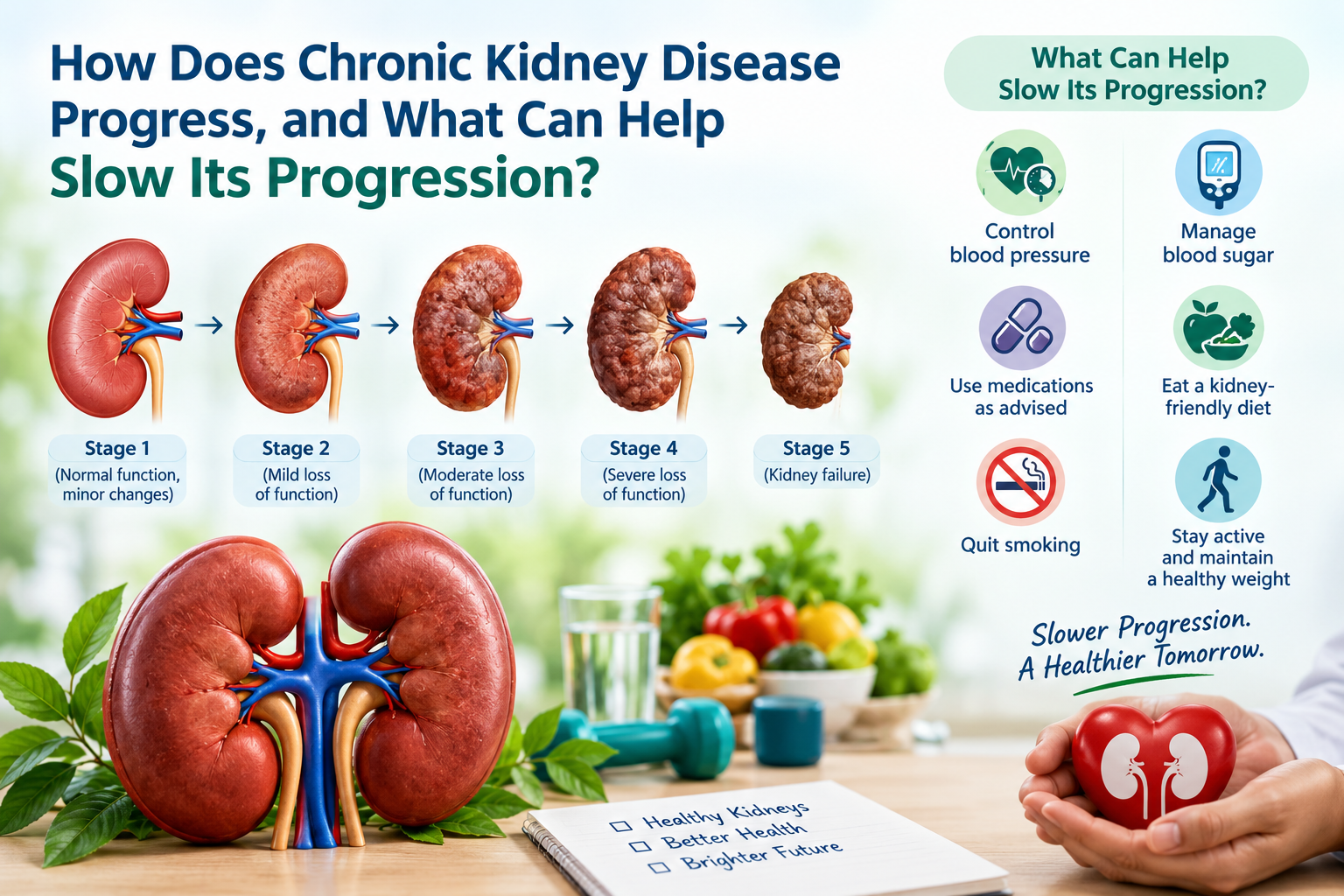
Doctors classify CKD into five stages based primarily on estimated glomerular filtration rate (eGFR), alongside other clinical findings. Stage 1 indicates evidence of kidney damage with relatively preserved filtration, while Stage 5 represents kidney failure. Urine albumin levels also help assess kidney damage and the risk of progression.
Common causes include diabetes, high blood pressure, inherited kidney disorders, and certain inflammatory conditions. Without appropriate management, CKD may progress to advanced kidney disease, requiring specialist care and, in some cases, dialysis or transplantation.
What Are the Warning Signs of CKD Progression?
Early CKD often causes no obvious symptoms, making regular testing essential for people at increased risk. As kidney function declines, symptoms may include:
These symptoms can have other causes, so blood and urine tests are necessary to evaluate kidney function accurately.
What Can Help Slow Chronic Kidney Disease Progression?
Several evidence-based measures can help protect kidney function and reduce the risk of complications.
1. Control blood pressure: High blood pressure can damage the kidney's filtering units. Follow your clinician's treatment plan and monitor blood pressure regularly.
2. Manage diabetes: If you have diabetes, maintaining blood glucose within your recommended target range can help reduce further kidney damage.
3. Follow a kidney-appropriate diet: Limit excess sodium and choose balanced meals. Protein, potassium, and phosphorus requirements vary according to kidney function, so consult a registered dietitian or kidney specialist before making major dietary changes.
4. Avoid harmful medicines: Frequent or inappropriate use of nonsteroidal anti-inflammatory drugs (NSAIDs), such as ibuprofen, can harm kidney function in susceptible people. Ask your healthcare professional before taking new medicines or supplements.
5. Stay hydrated appropriately: Drink fluids according to your medical needs. People with advanced CKD or fluid retention may require specific fluid limits.
6. Attend regular check-ups: Monitoring eGFR, urine albumin, blood pressure, and relevant blood tests helps doctors identify changes and adjust treatment. Certain prescription medicines, including ACE inhibitors, ARBs, and SGLT2 inhibitors, may help eligible patients, depending on their condition.

Conclusion
Chronic kidney disease progression can often be slowed through early diagnosis, appropriate medical treatment, blood pressure and diabetes management, and sustainable lifestyle changes. Regular kidney function testing helps identify changes before serious complications develop. Anyone with persistent symptoms or risk factors should consult a qualified healthcare professional.
Karma Ayurveda by Puneet Dhawan may be considered by people seeking additional information about kidney health and supportive care. However, any Ayurvedic or herbal treatment should be discussed with a qualified kidney specialist because some products may harm the kidneys or interact with prescribed medicines.
Medical Disclaimer
This blog is intended for general educational purposes only. It does not provide individual diagnosis or treatment. Kidney health concerns can have different causes and may require personalised medical evaluation. Ayurvedic information shared here is for educational purposes and should not replace advice, diagnosis, or treatment from a qualified healthcare professional.
Talk to Our Expert about Your Concern
Frequently Asked Questions
1. Can chronic kidney disease progression be stopped?
Progression can sometimes be substantially slowed, but the outcome depends on the cause, disease stage, and response to treatment. Regular monitoring and managing contributing conditions are important.
2. How quickly does chronic kidney disease progress?
CKD may remain stable for years or worsen more quickly. The rate depends on kidney damage, underlying diseases, blood pressure, urine albumin levels, and other individual factors.
3. Can lifestyle changes improve kidney function?
Healthy habits may help preserve remaining kidney function and reduce complications. However, lifestyle changes do not reliably reverse established kidney damage, and medical treatment may still be necessary.
4. Which tests help monitor CKD progression?
Doctors commonly use blood creatinine to estimate eGFR and urine albumin-to-creatinine ratio (uACR) to assess kidney damage. Blood pressure and other tests may also be needed.




At Karma Ayurveda, every patient is treated with care, honesty, and respect. Our team guides you at every step, from the first consultation to regular follow-ups, so you always feel supported on your wellness journey. Visit Karma Ayurveda and experience the riches of natural healing in its true form.

100 Church Street, Suite 800, New York, NY 10007

+1 9298008690
Copyright © 2026. All Right Reserved. Karma Ayurveda