 September 27, 2026
How Do the Kidneys Affect Bone Health?
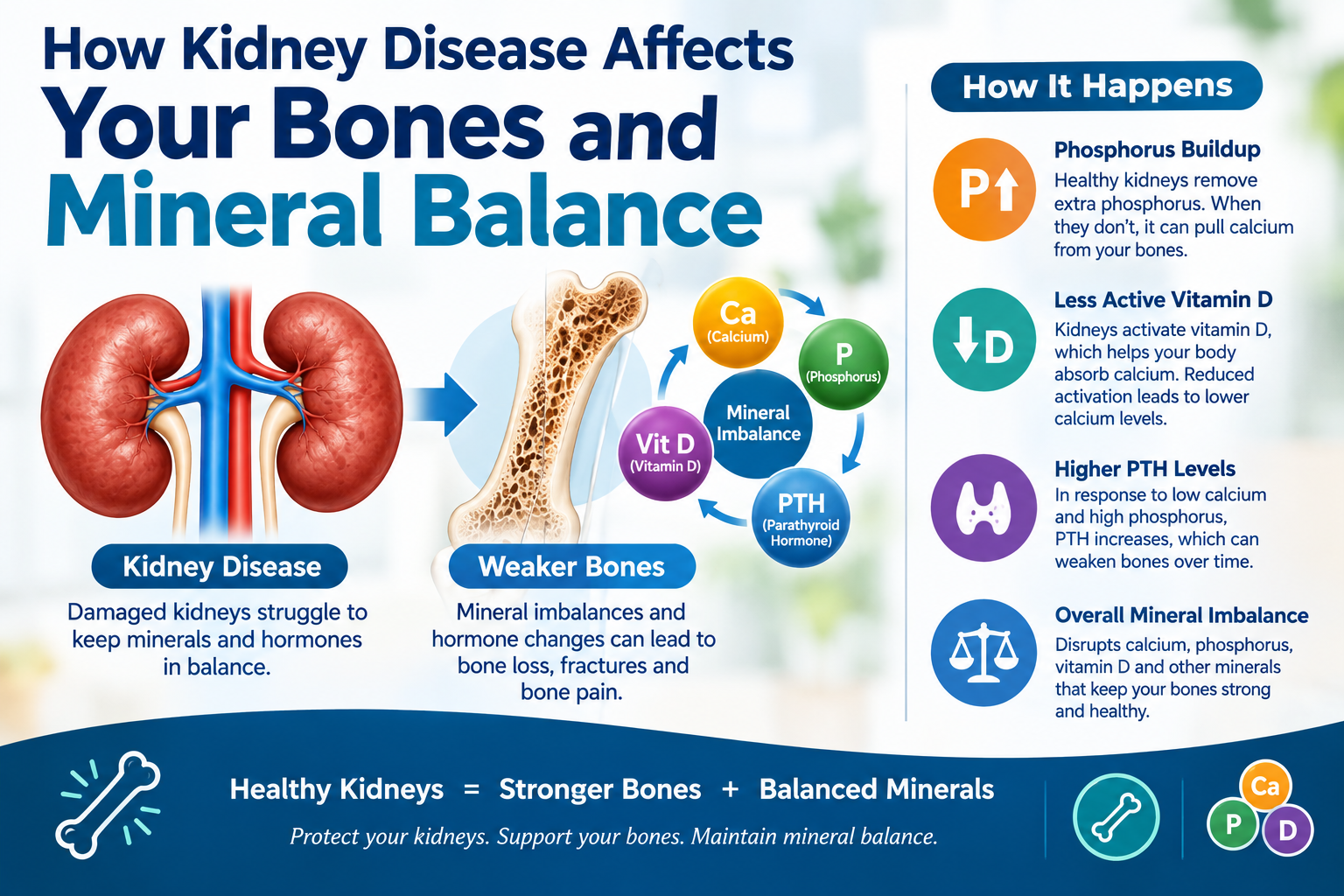
The kidneys play several important roles in maintaining strong bones. They help regulate phosphorus, maintain calcium balance, and convert vitamin D into its active form, calcitriol.
When kidney function decreases, the kidneys may have difficulty removing excess phosphorus and activating enough vitamin D.
These changes can affect calcium levels and stimulate the parathyroid glands to produce more PTH.
What Happens to Bones in Kidney Disease?
Over time, abnormal levels of calcium, phosphorus, vitamin D, and PTH can affect the way bones are formed and maintained.
Bones may become weaker, and some people may experience:
· Bone or joint pain
· Muscle weakness
· Increased risk of fractures
· Changes in bone structure
These complications are more common as CKD becomes more advanced.
Why Does Phosphorus Matter?
Phosphorus is an essential mineral, but the body needs it in the right amount.
When damaged kidneys cannot remove enough phosphorus, blood phosphorus levels may rise. This can contribute to changes in calcium and PTH regulation and affect bone health.
Managing phosphorus intake may therefore be part of treatment for some people with CKD.
How Is CKD-MBD Diagnosed?
Doctors may monitor several blood tests, including:
· Calcium
· Phosphorus
· PTH
· Vitamin D, when appropriate
· Kidney function tests
Additional testing, such as imaging or bone-density testing, may be considered depending on the individual's condition.

How Is Kidney-Related Bone Disease Managed?
Treatment depends on the stage of kidney disease and laboratory results. It may include:
· Dietary adjustments
· Medicines such as phosphate binders when prescribed
· Vitamin D-related treatments
· Treatment of abnormal PTH levels
· Appropriate dialysis management
· Regular monitoring of calcium and phosphorus
Do not take calcium or vitamin D supplements on your own if you have CKD, as excessive amounts may be harmful.
Medical Disclaimer
This blog is intended for general educational purposes only. It does not provide individual diagnosis or treatment. Kidney health concerns can have different causes and may require personalised medical evaluation. Ayurvedic information shared here is for educational purposes and should not replace advice, diagnosis, or treatment from a qualified healthcare professional.
Talk to Our Expert about Your Concern
Conclusion
Kidney disease and bone health are closely connected. Regular monitoring of calcium, phosphorus, PTH, vitamin D, and kidney function can help identify mineral and bone problems early and guide individualized treatment.
Frequently Asked Questions
Can kidney disease make bones weak?
Yes. Advanced or poorly controlled CKD can disturb mineral and hormone balance, which may weaken bones and increase fracture risk.
Does kidney disease affect vitamin D?
Yes. Damaged kidneys have reduced ability to convert vitamin D into its active form, which can contribute to mineral and bone abnormalities.
Can high phosphorus affect bones?
High phosphorus can disrupt calcium and PTH regulation and contribute to CKD-related mineral and bone disorder.




Karma Ayurveda, established in 1937, is the leading natural healthcare provider in the country. Visit us and experience the riches of natural healing in its true color.

100 Church Street, Suite 800, New York, NY 10007

+1 9298008690
Copyright © 2026. All Right Reserved. Karma Ayurveda