 September 24, 2026
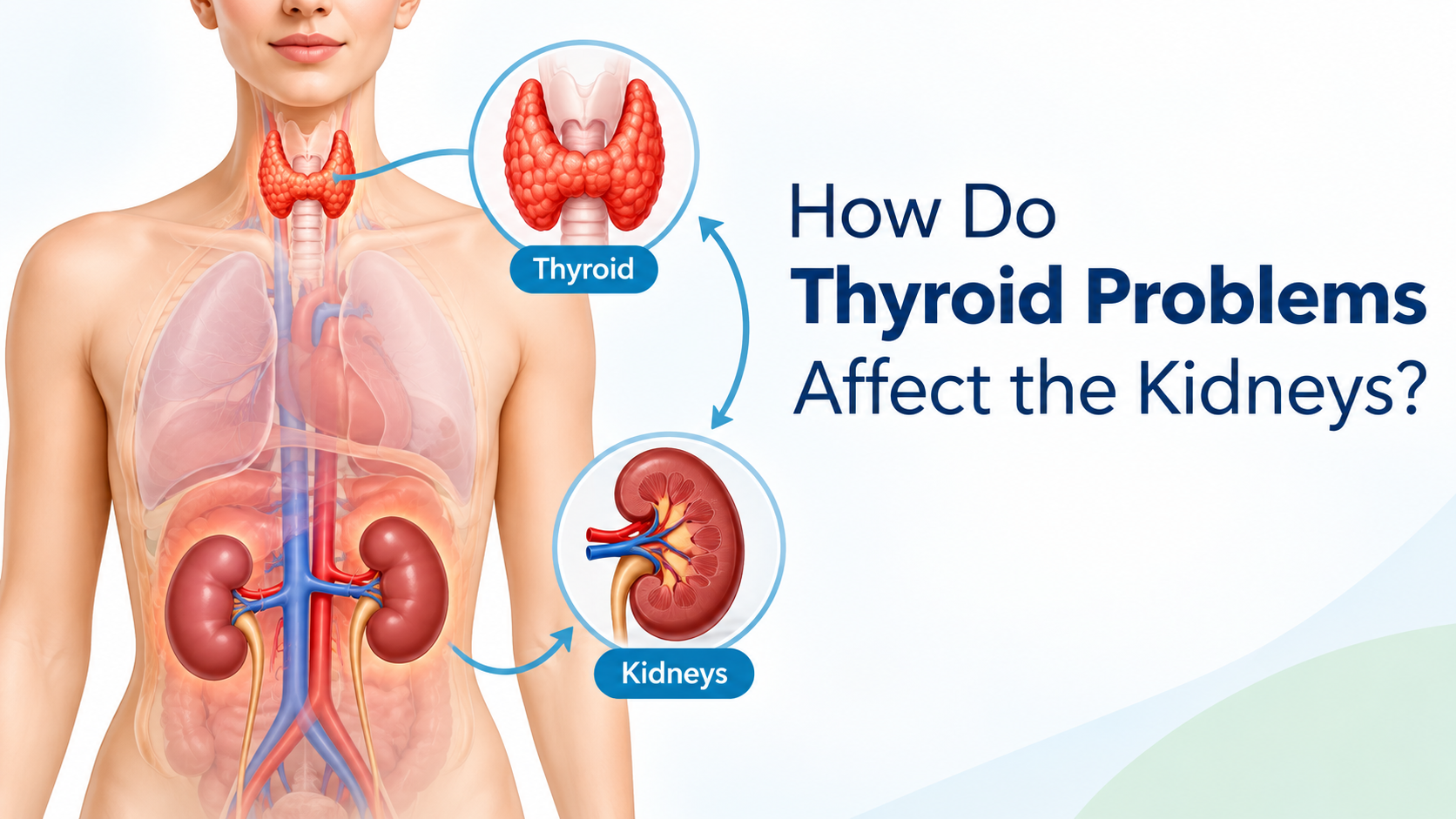
How Are the Thyroid and Kidneys Connected?
The thyroid gland produces hormones called T3 (triiodothyronine) and T4 (thyroxine). These hormones influence how quickly many processes occur throughout the body.
The kidneys depend partly on adequate blood flow to filter waste effectively. Changes in thyroid hormone levels can affect circulation, kidney blood flow, and the glomerular filtration rate (GFR)—an important measure of kidney function.
This means that an untreated thyroid disorder may sometimes cause changes in kidney-related blood tests.
Can Hypothyroidism Affect Kidney Function?
Yes. Hypothyroidism, or an underactive thyroid, can affect kidney function.
Low thyroid hormone levels may reduce heart output and kidney blood flow, potentially lowering the rate at which the kidneys filter blood. Some people with hypothyroidism may also have an increase in serum creatinine, a blood marker used to assess kidney function.
In certain cases, treating hypothyroidism can improve these kidney-related changes. However, an elevated creatinine level should not automatically be attributed to thyroid disease because it can have many other causes.
Can Hyperthyroidism Affect the Kidneys?
Hyperthyroidism, or an overactive thyroid, can also influence kidney function.
Excess thyroid hormone can increase metabolism, heart rate, and circulation. It may alter kidney blood flow and filtration. In addition, symptoms such as excessive sweating, diarrhea, or increased fluid loss can contribute to dehydration, which may temporarily affect kidney function.
Therefore, abnormal kidney test results in someone with hyperthyroidism need appropriate medical evaluation.
Can Kidney Disease Affect the Thyroid?
The relationship works both ways. Chronic kidney disease can affect thyroid hormone metabolism and thyroid function tests.
As kidney function declines, changes can occur in the way thyroid hormones are processed and regulated. This can make thyroid test results more difficult to interpret, particularly in people with advanced kidney disease.
For this reason, doctors may consider both kidney and thyroid health when evaluating abnormal laboratory results.
What Tests Check Thyroid and Kidney Health?
If both conditions are suspected, doctors may recommend blood and urine tests.
Thyroid tests may include:
Kidney tests may include:
These tests help doctors determine whether abnormal results may be related to thyroid dysfunction, kidney disease, dehydration, medications, or another underlying condition.
What Symptoms Should You Watch For?
Thyroid and kidney conditions can have overlapping symptoms.
Hypothyroidism may cause fatigue, weight gain, feeling cold, dry skin, and constipation. Kidney disease may cause swelling, changes in urination, fatigue, nausea, or high blood pressure.
However, early kidney disease often causes few or no symptoms, making routine testing important for people at higher risk.
How Can You Support Thyroid and Kidney Health?
Managing an existing thyroid condition as recommended by your doctor is important. Other healthy habits include:
People with kidney disease may require specific dietary or fluid restrictions, so these should be individualized by a healthcare professional.

Final Thoughts
Thyroid and kidney health are interconnected. Both underactive and overactive thyroid conditions can influence kidney function and laboratory results, while chronic kidney disease can also affect thyroid hormone metabolism. If thyroid or kidney tests are abnormal, proper medical evaluation can help identify the underlying cause and guide appropriate treatment.
Medical Disclaimer
This blog is intended for general educational purposes only. It does not provide individual diagnosis or treatment. Kidney health concerns can have different causes and may require personalised medical evaluation. Ayurvedic information shared here is for educational purposes and should not replace advice, diagnosis, or treatment from a qualified healthcare professional.
Talk to Our Expert about Your Concern
FAQs
Can thyroid problems increase creatinine?
Yes. Particularly with hypothyroidism, changes in kidney blood flow and filtration can sometimes increase serum creatinine.
Does hypothyroidism affect eGFR?
It can. Hypothyroidism may be associated with reduced eGFR in some people, and treatment may improve kidney function when thyroid dysfunction is the underlying cause.
Can kidney disease cause thyroid problems?
Kidney disease can alter thyroid hormone metabolism and thyroid test results, particularly in advanced chronic kidney disease.




At Karma Ayurveda, every patient is treated with care, honesty, and respect. Our team guides you at every step, from the first consultation to regular follow-ups, so you always feel supported on your wellness journey. Visit Karma Ayurveda and experience the riches of natural healing in its true form.

100 Church Street, Suite 800, New York, NY 10007

+1 9298008690
Copyright © 2026. All Right Reserved. Karma Ayurveda