 September 28, 2026
Why Does Kidney Disease Cause Anemia?
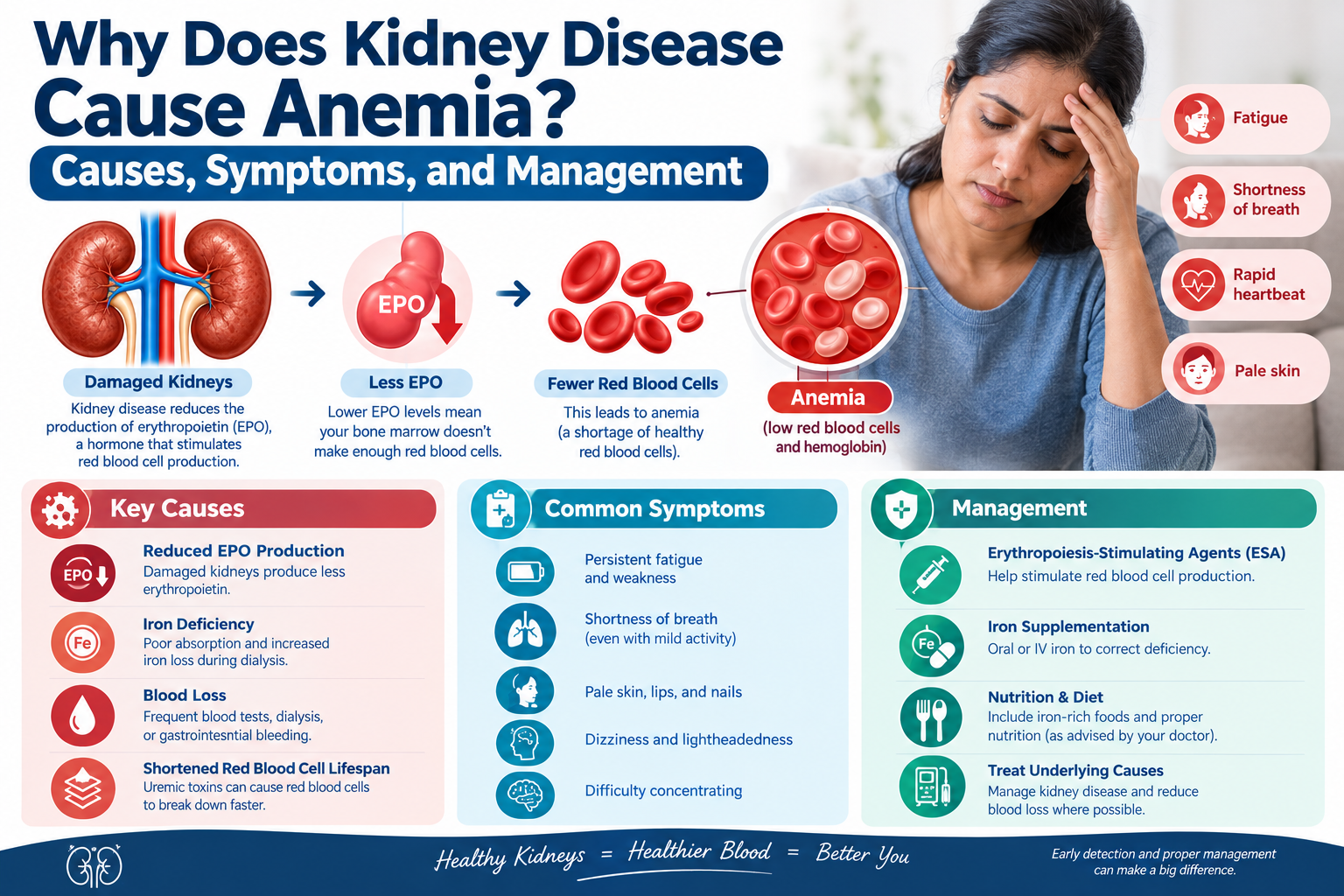
Healthy kidneys produce a hormone called erythropoietin (EPO). EPO signals the bone marrow to make red blood cells.
When the kidneys are damaged, they may produce less EPO. As a result, the body may make fewer red blood cells.
However, reduced EPO is not the only cause. People with CKD may also develop anemia because of:
· Iron deficiency
· Vitamin B12 or folate deficiency
· Chronic inflammation
· Blood loss
· Reduced red blood cell lifespan
· Blood loss associated with dialysis in some patients
What Are the Symptoms of Anemia?
Anemia can develop gradually, and some people may have few symptoms initially.
Possible symptoms include:
· Tiredness and weakness
· Shortness of breath
· Dizziness or light-headedness
· Headaches
· Pale skin
· Difficulty concentrating
· Fast or irregular heartbeat
· Reduced energy
Severe symptoms such as significant breathing difficulty or persistent chest pain require prompt medical attention.
How Is Anemia in CKD Diagnosed?
Doctors typically use blood tests to evaluate anemia and identify possible causes.
Tests may include:
· Hemoglobin and complete blood count (CBC)
· Ferritin
· Transferrin saturation (TSAT)
· Vitamin B12 and folate when appropriate
· Other tests based on symptoms and medical history
The results help determine whether anemia is related to kidney disease, iron deficiency, blood loss, or another condition.
How Is Anemia Treated?
Treatment depends on the underlying cause and severity.
If iron deficiency is present, a healthcare professional may recommend oral or intravenous iron. Vitamin B12 or folate may be prescribed when a deficiency is identified.
Some people with CKD may require medicines called erythropoiesis-stimulating agents (ESAs), which help stimulate red blood cell production.
Treatment is individualized because excessively increasing hemoglobin can also carry health risks.

Can Diet Help With Anemia?
Nutrition can play a role, particularly when iron, vitamin B12, or folate deficiency is present. However, people with CKD may have dietary restrictions involving sodium, potassium, phosphorus, or protein.
For this reason, do not significantly increase iron-rich foods or start iron supplements without discussing your diet and laboratory results with your healthcare professional or kidney dietitian.
Conclusion
Kidney disease can cause anemia because damaged kidneys may produce less EPO, while iron deficiency, inflammation, blood loss, and other factors can contribute. Regular blood tests help identify anemia and its cause so that appropriate treatment can be planned.
Medical Disclaimer
This blog is intended for general educational purposes only. It does not provide individual diagnosis or treatment. Kidney health concerns can have different causes and may require personalised medical evaluation. Ayurvedic information shared here is for educational purposes and should not replace advice, diagnosis, or treatment from a qualified healthcare professional.
Talk to Our Expert about Your Concern
Frequently Asked Questions
Is anemia common in kidney disease?
Yes. Anemia becomes more common as kidney function declines, particularly in advanced CKD and kidney failure.
Does kidney disease cause low hemoglobin?
It can. Reduced EPO production is one of the major reasons people with CKD may develop low hemoglobin.
Can anemia from kidney disease be treated?
Yes. Treatment may include iron, vitamins when deficient, ESAs, and management of other underlying causes.




Karma Ayurveda, established in 1937, is the leading natural healthcare provider in the country. Visit us and experience the riches of natural healing in its true color.

100 Church Street, Suite 800, New York, NY 10007

+1 9298008690
Copyright © 2026. All Right Reserved. Karma Ayurveda